Top 4 air purifiers and how to choose the best one
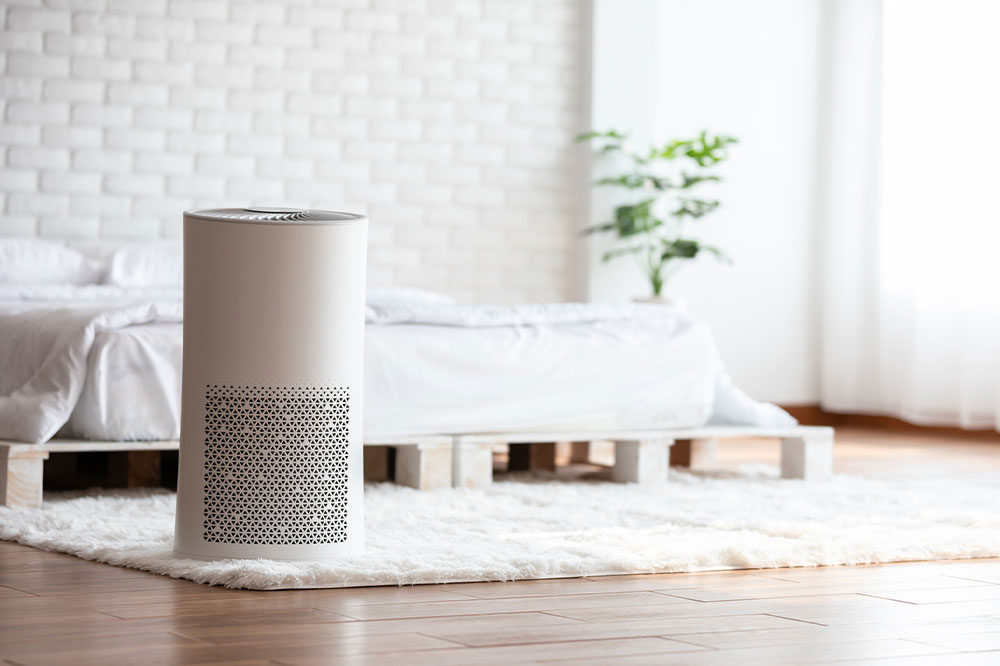
With increasing sensitivity to allergens and rising pollution levels, air purifiers have become essential appliances. According to Bloomberg, the air purifier market will likely exceed $7 billion by 2032. This is not surprising at all, given how polluted the indoor environment can be, with the principal sources being dust, fires, car emissions, and cooking. Today you can find all kinds of purifiers, so here is all you need to know before buying one:
Top air purifiers
Here are some of the best options for your home:
Levoit LV-H132
One of the top-rated purifiers, the LV H132 by Levoit, is compact and small, with a capacity for filtering up to 129 square feet. It has a HEPA filter (or high-efficiency particulate air filter) capable of eliminating 99.97% of pollen, dust, odor, smoke, pet dander, and mold spores. It promises an outstanding performance backed by features like a three-stage filtration arrangement consisting of a HEPA filter, an activated carbon filter, and a pre-filter. Additionally, it comes with three fan settings, allowing you to control the purifier’s volume and speed. Furthermore, it is so tiny that you can easily place it on your desk.
Levoit VeSync Core 400S Smart air purifier
While most top purifiers on this list effectively eliminate pollutants from the air, the VeSync Core 400S by Levoit goes one step further and allows you to check the air quality indoors as well as outdoors. It has a VeSync app that provides real-time data about your home’s air quality, and you can also synchronize the unit with voice assistants. Besides that, it has an Auto Mode that conserves a lot of energy by automatically adjusting the fan speed according to the current air quality. Apart from these high-tech capabilities, the VeSync Core 400S possesses all the necessary features of a purifier, including a HEPA filter, and it can circulate air 5 times per hour with a wide cleaning radius of up to 403 square feet.
Honeywell HPA100 True HEPA Allergen Remover
The HPA100 model by Honeywell may look like a space heater; however, do not underestimate its capabilities. This is one of the most flexible air purifiers that comes with a HEPA filter capable of eliminating 99.97% of air pollutants and a control panel allowing you to choose between 4 different levels of air cleaning. You can place it in a medium-sized room with an area of up to 155 square feet. It will clean the air five times per hour.
Coway Airmega AP-1512HH
This compact model by Coway is one of the highest-rated air purifiers across the board. With a four-stage filtration process comprising a HEPA filter, a pre-filter, a Vital Ion filter, and a deodorization filter, it eliminates 99.7% of pollutants from the air, including odor and volatile organic compounds. Further, it comes with an Auto Mode that conserves a lot of energy by automatically stopping the fan if it senses no pollutants for 30 minutes. As its a small appliance, it has a cleaning radius of 361 square feet, which is the size of a typical bedroom.
How to choose the best air purifier?
The Environmental Protection Agency suggested that the indoor air tends to be far more polluted than the air outdoors. The pollutants present in the air can irritate your lungs or cause severe allergic reactions. This necessitates the reduction of indoor air pollutants, which explains the growing demand for air purifiers. However, with a number of options now available, choosing the right machine requires a little bit of research and careful consideration. One key factor that you must consider, according to experts, is filtration. Several testing procedures and standards can make the task easier. Among them, two parameters should be given the highest priority:
Clean air delivery rating (CADR): This rating reveals the amount of air (measured in terms of cubic feet per minute) a purifier can process in a minute. It is verified by the Association of Home Appliance Manufacturers (or AHAM), an organization representing household appliances manufacturers. The AHAM operates in association with several independent laboratories to evaluate various purifiers to confirm if they meet the standards. The verification process also includes the evaluation of CADRs across various particulates like pollen and dust. According to AHAM, a standard purifier should possess a CADR of about two-thirds area of the space you occupy (measured in square feet).
High-efficiency particulate air filters (HEPA filters): This is an efficiency standard that indicates how well your air purifier can clean up the pollutants, say dust, pollen, and smoke in a given space. Most professionals believe that HEPA is a significant marker for evaluating filtration. However, it is crucial to combine HEPA-level filtration with the CADR. This will provide you with more information regarding the performance of your air purifier.
Given how polluted the air in our homes can be, purifiers are indeed the need of the hour. However, before purchasing an air purifier, you should understand your requirements and check out the different features of all the appliances. You should also study the test procedure and standards used to assess the capacity of a purifier.