9 mistakes to avoid when buying office furniture
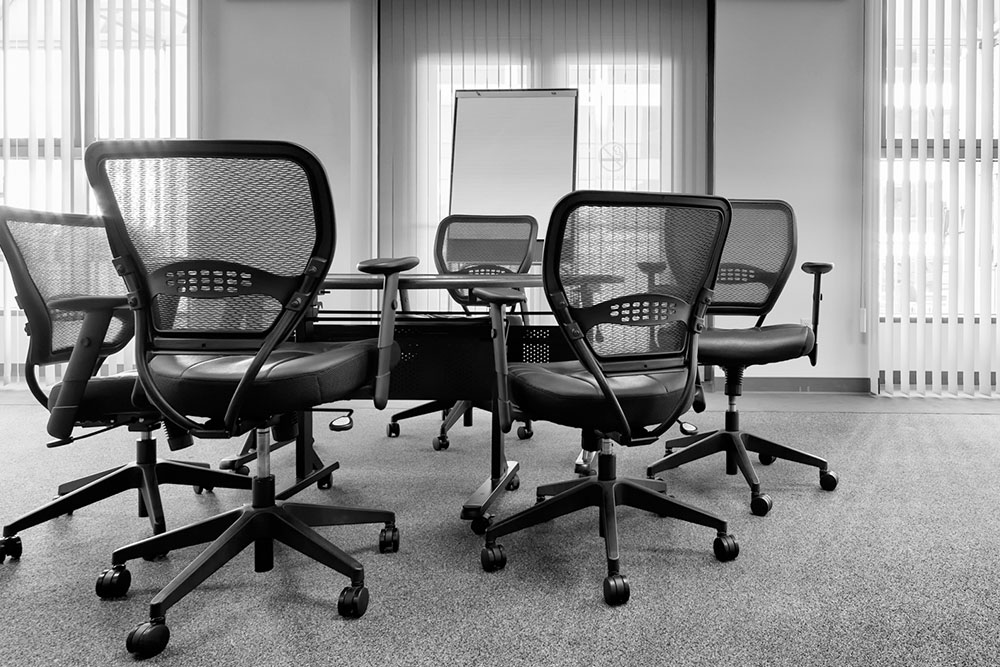
Office furniture is a one-time investment that should be made with utmost care and planning. As the saying goes, “measure twice, cut once,” so does planning to buy office furniture. Having a floor plan, a design, a budget, and a vision for what the office should look like with the new furniture is very important. So, “measure twice and buy once,” and avoid making these nine mistakes when purchasing office furniture.
Not having a budget
This goes for anything. Having a budget is important before even thinking of looking at catalogs and brochures. One should allot funds for each piece of furniture and then start shopping around. A budget allows one to enjoy some wiggle room for reallocating finances for each piece of furniture. It also gives one a bargaining opportunity to ensure the best value for money purchase. While having a budget is important, overshooting it should be avoided. Buyers must start with a reasonable budget and ensure there is at least some leeway. When shopping for office furniture, one should also ensure the final cost includes everything, like shipping, assembly, and installation. One should not neglect to consider the true cost, which includes all of these.
Choosing looks over comfort
Great looks don’t necessarily mean great comfort, ergonomics, or value. A good-looking office chair means nothing if it doesn’t have lumbar support, contoured seats, or comfortable armrests. In the same way, a sleek desk or smart cabinet will be useless if they don’t accommodate needs and aren’t spacious enough. Sooner or later, employees might not be able to adjust to the furniture, and it might be discarded for something more practical and functional. Instead, one should look for pieces of furniture that blend with the office’s aesthetic, fit the budget, and are also comfortable to work with.
Prioritizing cost over quality
Just like buying furniture for its looks is counterproductive, so is focusing only on the cost aspect. If office furniture is bought with just cost in mind, one might end up with unattractive, uncomfortable, and non-functional furniture that would not serve the purpose. Cheap furniture only lets users meet their basic needs, while ergonomics, comfort, looks, and function go out the window. Not having good furniture in the office can make day-to-day operations very difficult.
Buying without trying
Shopping around for office furniture can be painful, but one should not decide based on online images alone. Individuals should buy only from dealers that have a physical store. Checking all the types of furniture one intends to purchase from them is essential. Inspecting the drawers, the runners, the knobs, the chair ergonomics, cabinet space efficiency, etc., will give one a sense and feel of the quality and sturdiness of the furniture.
Buying furniture without a warranty or after-sales service
The task doesn’t end after buying furniture and getting it delivered to the office. One must have a point of contact for after-sales service and, of course, a warranty card. Not asking for information on warranty and after-sales service is a mistake one must avoid when shopping for office furniture. One should always check with the vendor to understand how they handle warranty repairs, spare part provisions, or even problems that may arise during shipping.
Not sticking with one vendor
Buying mismatched furniture can give the office a unique look. However, even mismatched products in the office should have a common theme or a commonality between them. If that is not the look one is going for, then buying office furniture from different vendors can make the space look shabby and look like the furniture has been sourced from a thrift store. On the other hand, buying all furniture from one vendor will give the space some uniformity and also make it easy to keep track of warranties and follow up on repairs, maintenance, etc.
Not measuring the space
Going in blind is the last thing one needs to do when getting office furniture. One should measure every last inch of the office space before buying. A clear layout and floor plan for the seating areas, the other areas that will need furniture, and the open areas will help a great deal in buying the perfect number of pieces of furniture for each purpose and space.
Selecting the wrong fabrics
Sometimes, one may like a particular chair or sofa design for the reception area but not be too fond of the fabric. If the dealer agrees to reupholster it, then choosing the right kind of fabric becomes essential. Not all fabrics work well in all areas. Leather and chenille do well in, say, a conference room, while mesh and polyester fabrics work well for office chairs. Durable and easy-to-clean fabrics should be the goal when choosing office furniture. One should avoid picking anything that is expensive, difficult to reupholster, or difficult to clean. Picking in-trend fabrics is also a mistake one should avoid because once the trend passes, it might be difficult to source the same fabric, leaving one with mismatched chairs.
Not getting rid of old furniture before buying new ones
When shopping for office furniture, one should always ask the dealer if they can take the old furniture, help get rid of it responsibly, or offer trade credit against it. This way, one saves money on the new furniture while also getting rid of the old furniture responsibly and without having to pay to dispose of it.