12 common toilet cleaning mistakes to avoid
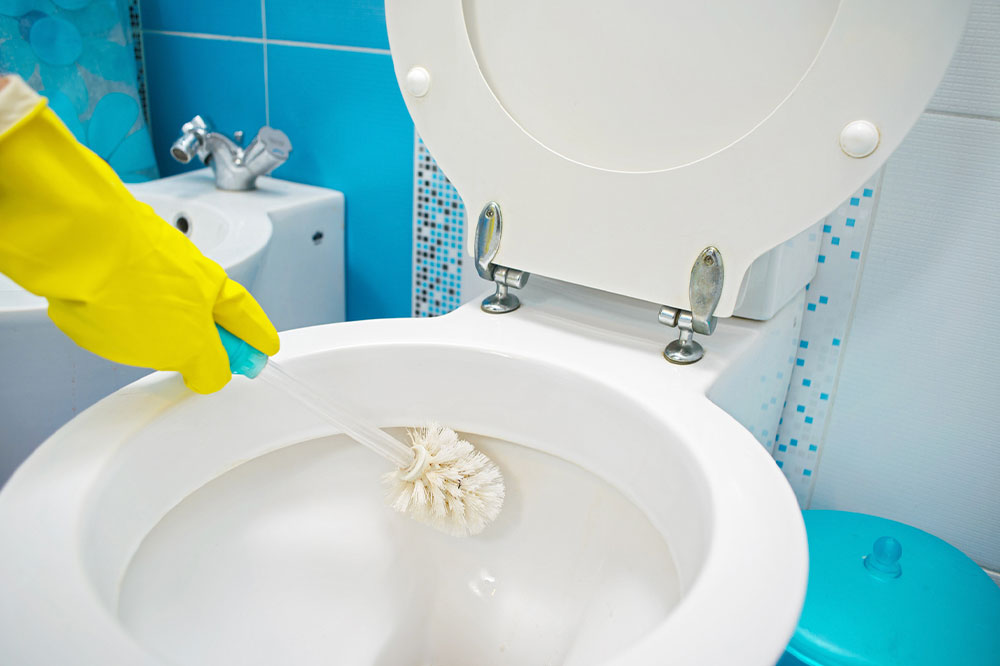
Cleaning the toilet is perhaps among the most dreaded tasks in every home. However, a clean toilet is essential to maintain hygiene and prevent urinary tract infections (UTIs) and other diseases. Today, several useful cleaning products and equipment are available to reduce manual effort and facilitate cleaner toilets. In addition, avoiding certain common toilet cleaning mistakes can help make the process more efficient and less time-consuming while ensuring better hygiene.
Not knowing the different ways to unclog a toilet
Unclogging the toilet can be the first step to the toilet-cleaning process. A clogged toilet can cause considerable inconvenience; moreover, at times, certain techniques may not be effective in unclogging the drain. Thus, it is important to understand the various hacks to unclog a toilet. Pouring vinegar or dish soap into the toilet should typically do the trick; however, at times, these techniques may not be effective. In such cases, one should try other methods, such as using a wet or dry vacuum to unclog the drain after emptying the water from the bowl.
Using a mixture of cleaning products
Every cleaning product has its distinct functions; however, mixing together certain cleaning products can give rise to lethal, corrosive solutions. For example, combining bleach and vinegar produces chlorine gas, which can lead to breathing issues, coughing, and watery eyes. Similarly, a bleach and vinegar solution forms chloramine, which can cause shortness of breath and chest pain. Thus, it is crucial to understand the consequences of mixing certain cleaning products and avoid using such solutions while cleaning.
Not cleaning the toilet brush
The toilet brush can become the breeding ground for bacteria and germs if not cleaned regularly. Thus, it should ideally be cleaned after every use. An effective way to clean the toilet brush is to soak it in a solution comprising hot water and 2-3 bleach pods and leaving it for an hour before rinsing it off.
Washing the toilet immediately after spraying the cleaning solution
Wiping off the toilet seat and bowl immediately after spraying the cleaning solution reduces their efficacy. Thus, it is advisable to leave the cleaning solution on these surfaces for about 2-3 minutes before wiping it off.
Leaving the cleaning solution on the toilet for too long
The longer a cleaning agent is left on the toilet surface, the more difficult it is to wipe off later. Moreover, the toilet seat and bowl tend to get sticky if the solution is left to dry on them. So, while it helps to leave the cleaning solution on the toilet surfaces for 2-3 minutes, one should not wait for longer before wiping it off.
Not cleaning the exhaust fan
The exhaust fan plays an integral role in warding off moisture and odor. An unclean exhaust fan can cause mildew to develop as a result of moisture, leading to a foul smell. Thus, cleaning the exhaust fan should be an essential part of one’s toilet cleaning routine.
Forgetting to clean the flush valve or button
The flush valve or button is used repeatedly and can become contaminated with microorganisms and bacteria with time. Thus, it is essential to wipe the flush valve thoroughly while cleaning the toilet. The flush valve can be cleaned with a vinegar solution, using a sponge or microfiber cloth or even an old toothbrush.
Using abrasive toilet cleaners
Abrasive toilet cleaners can scratch the surfaces of toilet bowls. Thus, it is advisable to swap such abrasive cleaners with milder ones. For example, one may pour a cup of vinegar in the toilet bowl, let it rest overnight, and then, clean the toilet bowl the next morning after sprinkling some baking soda on its surfaces.
Not cleaning or changing the sponge
The sponge can accumulate considerable bacteria, dust, and germs with time, especially if the same sponge is used to clean different surfaces. Thus, it is important to clean the sponge regularly or use different sponges for different surfaces. An effective way to clean sponges is to soak them in a bleach solution for five minutes and rinse off the accumulated dirt.
Not cleaning grout
Although grout cleaning is a painstaking task, it can spoil the esthetics of one’s bathroom and toilet. The best way to clean grout is to use a regular or electric toothbrush or a mini grout scrubber and clean the areas using a store-bought or DIY grout cleaner. One may prepare a DIY grout cleaner by mixing half a cup of baking soda, quarter of a cup of hydrogen peroxide, and a teaspoon of dish soap. Scrubbing this solution over the affected surfaces can ensure effective grout removal and leave the toilet looking spick and span.
Not ventilating after cleaning
After cleaning the toilet, it is essential to ventilate the area to ensure that any chemicals are filtered out of the area. Switching on the exhaust fan after cleaning the toilet can help ventilate the bathroom effectively.
Not having a multi-purpose cleaner handy
Although specific toilet cleaners can be highly effective in cleaning the toilet, one should always have a multi-purpose cleaner handy for situations wherein the toilet cleaner gets over and the cleaning process remains to be completed. Thus, it is a good idea to invest in a multi-purpose cleaner by a reputable brand.
Toilet cleaning can be an efficient process if one remembers to use the right cleaning tools and solutions and follows some quick hacks. It is advisable to designate certain days for toilet cleaning in the week or month to ensure that this activity is not delayed. Moreover, cleaning the equipment required for the process beforehand and stocking up on toilet cleaning agents can help make the process seamless.