12 common signs that indicate foundation problems
Every building needs a solid foundation to ensure its stability and longevity over the years. Eventually, however, several factors can cause foundational problems, which can lead to costly repair work if left unattended. Pipe cracks, natural disasters, and poor soil conditions are some reasons a foundation might develop problems. If one is vigilant, one can detect the structural indicators of a possible foundational problem and get them fixed as soon as possible.
Difficulty opening doors and windows
If a building structure has a weak foundation, it can cause the doors and windows to become misaligned. As a result, they might stick against the hinges, making it difficult to open. This might indicate a larger issue with the foundation of the structure.
Sloping floors
When there is a problem with the foundation, it can manifest in various ways, one of which is a sudden unevenness in the floors. This can be observed as a slope or tilt in the room or as an unsteady feeling underfoot while walking. It is important to be aware of these signs and take prompt action by getting the foundation assessed.
Mildew odor
Moisture can lead to the growth of mold and mildew, which can be caused by various reasons, such as rainwater or groundwater seepage. But if there’s a persistent damp smell of mold and mildew, it’s time to have the foundation inspected. This is particularly because cracks in the foundation may be causing water to seep into the structure, causing mildew growth. Such seepage implies that cracks are forming on the foundation, which need to be filled before the situation worsens.
Wall cracks
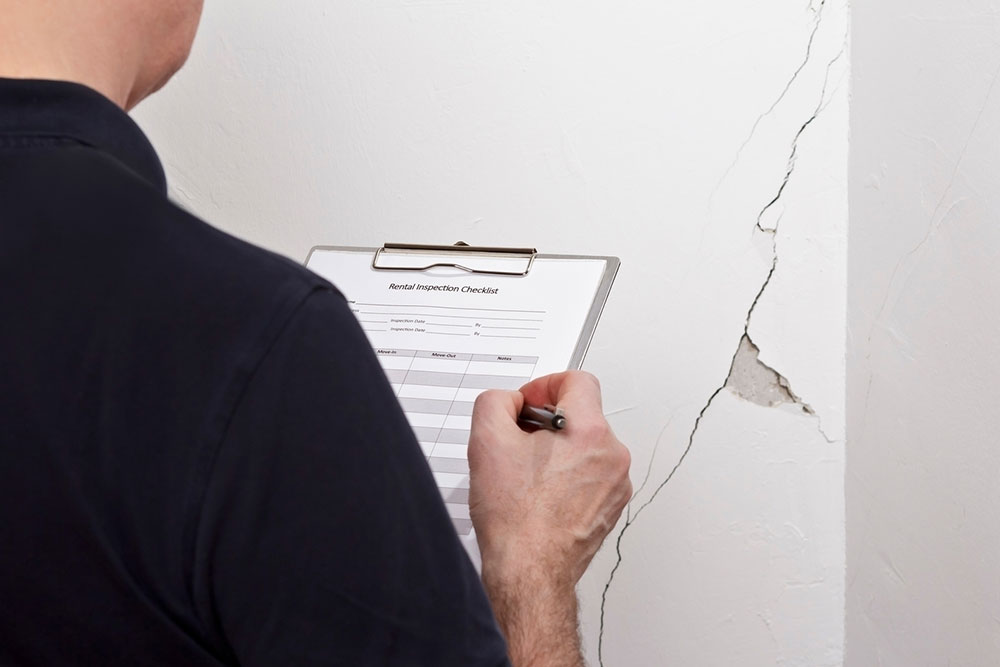
Cracks on walls are rather direct indicators of problems with a house’s foundation. These cracks usually start small, but they begin to broaden with time, causing water seepage. Horizontal cracks are particularly a cause of concern, because they usually stem from a settling or shifting foundation. That said, even vertical cracks may indicate a foundational problem, especially if they are wider on the top than the bottom.
Sagging or crumbling walls
The condition of the walls in a home says a lot about the situation of the foundation. So, if the walls of a structure are crumbling, sagging, or bowing down, get the structure thoroughly checked by an expert to determine the root cause.
Gaps in the door and window frames
If there are apparent gaps around window and door frames, it could imply serious foundation problems. Such gaps usually develop as a result of a shift in the foundation, causing frames to pull away from the walls. These gaps do a lot more than spoil the building’s visual appeal— they can lead to a loss of energy with time.
Cracks in the siding
Siding, or the external layer of protection in a house or other structure, might develop cracks in case of a foundational issue. One should always be vigilant about cracks developing on the siding, particularly between the siding and frames of doors and windows. If left unattended, these gaps can cause further damage because of moisture.
Persistent drainage issues
Sometimes, floors and other surfaces of a home become uneven over time. In such cases, the natural course of water pipes running through the house might get disturbed, causing restrictions to water flow and triggering drainage problems. Several other factors might also cause drainage problems. If one notices persistent drainage issues, one should check the walls, doors, windows, and other elements of the structure to detect any foundational problems.
Separation of the chimney
When there’s a shift in the foundation, a house’s chimney also begins pulling away from the structure. This shift is a potential threat to safety and shouldn’t be ignored. If one notices tilting or separation of the chimney from the rest of the house, a professional should be called in at once to check for any damage and rectify it as soon as possible.
Water accumulation around the foundation
In general, buildings are constructed in such a way that water drains away from them or in the opposite direction. But if there’s unexplained water accumulation around the foundation, there’s a possibility that the foundation is sinking. It may also indicate some other issue, such as landscape erosion, but regardless, it is essential to have a foundation examined immediately.
Constant popping out of nails from the wall
If a nail occasionally pops out of a wall or comes out entirely, it’s not really a cause for concern – the nail can be fixed back into the wall in no time. But if this happens time and again, there could be an underlying foundation problem, indicating that the walls in the structure are probably shifting.
Tile cracks
Unevenness of the floor might cause cracks to develop on floor tiles, which may become fragile over time. So, if the tiles in a house shake or have cracks, one must pay attention.
It’s always best to use the right tools and equipment when checking the foundation for damage. A professional should be consulted for this task because experts can easily detect the exact foundational problem and suggest the ideal repair work.