11 Simple Remedies for Managing Cold Sores
Cold sores appear in the form of blisters on the lips or the area around the mouth and are often a symptom of the herpes simplex virus. The blisters are filled with fluid and can break open and ooze. These usually crust over and go away in seven to ten days; however, the healing process may be painful. In such cases, the pain and discomfort can be alleviated using certain simple remedies for cold sores.
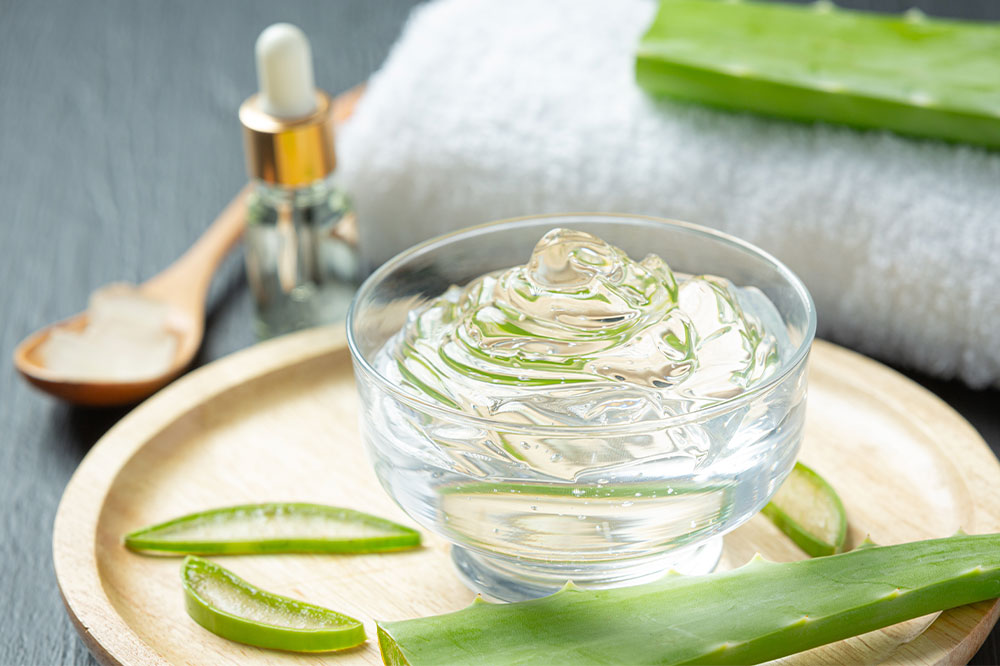
Use aloe vera gel
Aloe vera is known to have antiviral and anti-inflammatory properties. As a result, it has inhibitory characteristics. This is why applying aloe vera gel can give temporary relief from the pain and discomfort caused by cold sores. A little bit of pure aloe vera gel can be dabbed over the areas where cold sores have formed. This can be done three to four times a day until the cold sores heal.
Wear sunscreen
One of the main triggers of cold sores is sunburn. Prolonged exposure to the sun can cause cold sores to flare up. To avoid this, the application of sunscreen is often recommended. A broad-spectrum sunscreen preferably with minimum SPF 30 should be applied daily. This should be done at least 20 minutes before heading into the sun. Protection from the sun can be also attained by wearing a wide-brimmed hat and avoiding going out in the sun between 10 a.m. and 4 p.m. Also, whenever possible, it is best to stick to shaded areas.
Use lemon balm
Lemon balm is known to boost cognitive function and mood. Moreover, it has antiviral properties that can help in the healing of cold sores caused by the herpes simplex virus. Essential oil containing lemon balm can be used as a simple remedy for cold sores. In addition, lip balm that contains about 1% lemon balm can also helpful. Another simple remedy for cold sores is to drink tea that has lemon balm or use a compress soaked in lemon balm tea.
Make cornstarch poultice
Traditionally, a poultice made of cornmeal has been known to be an easy remedy for cold sores. The cornmeal can be swapped with cornstarch. It can be mixed with water to make a paste and dabbed on the sores to get relief from pain and inflammation. Cornstarch is believed to neutralize the pH balance of the areas of the skin where the cold sores have formed. This helps in faster healing.
Use tea tree oil
With its anti-fungal, antibiotic, and antiseptic properties, tea tree oil is one of the most common remedies for several types of infections including cold sores. Applying this oil can help in the healing of cold sores. It may help alleviate discomfort, pain, and inflammation. However, it is important to use it with carrier oil such as almond oil, avocado oil, sunflower oil, or olive oil. These will lower the potency of the tea tree oil.
Apply vanilla extract
With its pleasant fragrance, vanilla extract is more useful than making a room smell fresh or baking desserts. Vanilla extract is known to have some percentage of alcoholic content. This helps in curbing the spread of the virus that causes cold sores. As a result, it can lower the intensity of inflammation and irritation caused by cold sores. This can help in the healing process as well.
Dab licorice paste
Licorice is known to have anti-viral and anti-inflammatory properties. It may protect against the effects of infections such as cold sores. Licorice tea is one of the simplest home remedies to treat the irritation caused by cold sores. Another easy method is to use licorice powder with petroleum jelly. This mixture can be dabbed on the areas where cold sores have appeared. Leave it on for a few hours or overnight for it to work well.
Apply a poultice of teabag
Another easy and simple remedy for cold sores is to use a poultice made of teabag. To do this, dampen the tea bag and keep it in the refrigerator for a while. Dab this damp and cool teabag to the areas where cold sores have broken out. The poultice can be applied for about ten minutes, three to four times a day to reduce the inflammation and irritation caused by cold sores.
Apply a cold ice pack
Although ice does not really heal cold sores, the use of ice is known to ease the inflammation and discomfort caused by cold cores. A cold pack can be directly applied over the areas where there is a breakout of cold sores. This may provide relief from the pain for a short while. However, there can be a risk of burning or irritation due to the ice. To avoid this, it is recommended to apply a cold pack for less than 15 minutes.
Use red wine
Red wine is not only good for the heart but it is also known to be a traditional remedy to manage cold sores. This is because red wine contains an antioxidant that has anti-inflammatory properties. Just pour a teaspoon of red wine into a small saucer or a plate. Let the water in the wine evaporate leaving behind a few solidified dregs. This can be applied to the sores to soothe the pain and inflammation.
Throw away the used toothbrush
Cold sores are known to be contagious; this type of infection can easily spread through contact. It is possible to avoid another outbreak of cold sores and prevent a flare-up. Just make sure to throw away the toothbrush that was being used during a flare-up. Additionally, it is recommended to throw away any other products such as lipsticks or lip balms that may have come in contact with the sores during a flare-up episode.